Taxila is often used as shorthand for Gandhara, but the material landscape extends well beyond it. Around Mardan and Peshawar, monasteries, settlement remains, inscriptions and museum collections let travellers examine how Buddhist institutions related to roads, towns, craft and patronage.
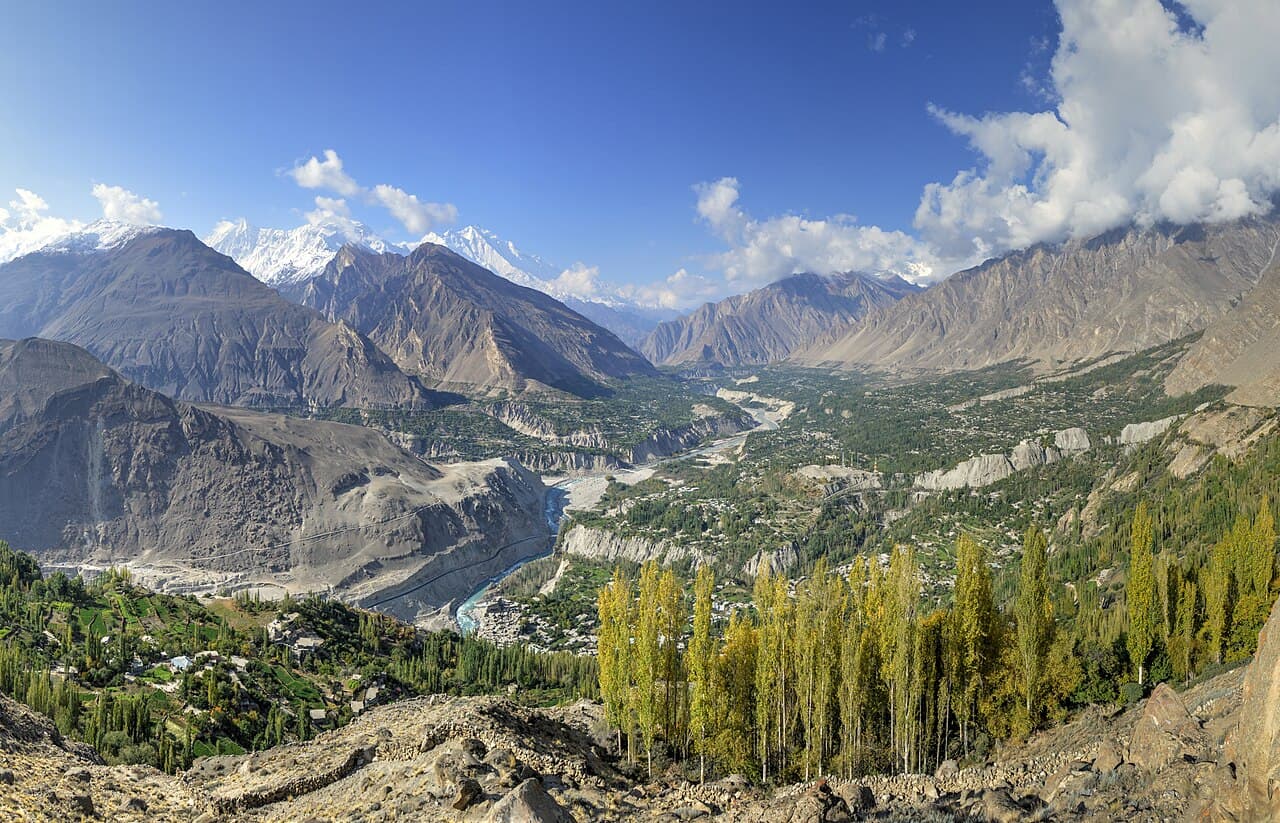
This route centres on Takht-i-Bahi and neighbouring Sahr-i-Bahlol, then uses provincial museums and selected sites to widen the frame. The cover photograph is Swat Valley, a broader north-western landscape reference rather than an image of Takht-i-Bahi.
At a glance
Start here
- Make Mardan the fieldwork focus and use Peshawar museums for object context and comparison.
- Treat Takht-i-Bahi and Sahr-i-Bahlol as paired but physically distinct components of one World Heritage property.
- Use official virtual tours to choose additional sites before committing road time.
- Keep labels, dates and find locations attached to objects and photographs.
01
Read the Mardan sites as a desk-based extension
Takht-i-Bahi and Jamal Garhi are in Mardan district. On 14 September 2026, the UK FCDO advised against all but essential travel to Mardan, while Australian and US advisories applied their highest no-travel level to most or all of Khyber Pakhtunkhwa. Those warnings make this a cultural explainer for many foreign readers rather than a ready-to-book circuit beyond Taxila.
Advice differs by nationality and can change. Check the government advisory tied to your passport, Pakistani authority requirements and insurance terms before considering any movement. A local operator or escort cannot cancel official no-travel advice. If the warnings apply, use the site plans and museum records in this article to understand monastic layout and conservation from a distance; postpone physical travel until the relevant authorities change their guidance.
Sources: UK Foreign, Commonwealth and Development Office; Australian Department of Foreign Affairs and Trade; United States Department of State02
Replace the single-site habit with a network
The Khyber Pakhtunkhwa archaeology authority lists a much wider field than one famous monastery: Takht-i-Bahi, Jamal Garhi, Ranigat, Shahbazgarhi and museums across the province appear in its official sites and monuments resources. The point is not to collect every name. It is to recognise that religious centres, towns, inscriptions and stored objects belonged to connected landscapes.
A manageable first route pairs one substantial archaeological day around Mardan with one museum-led day in Peshawar. Additional sites should be chosen for a clear question, such as monastic layout, urban relationship or inscription, rather than for numerical completion. This preserves time for interpretation and makes the journey genuinely different from a Taxila guide.
- Field anchor: Takht-i-Bahi and Sahr-i-Bahlol near Mardan.
- Collection anchor: Peshawar Museum, verified through the provincial virtual-tour directory.
- Optional comparison: one additional provincial site selected after reviewing official information.
03
Understand why two places share one inscription
UNESCO's property combines the Buddhist ruins of Takht-i-Bahi with the neighbouring city remains at Sahr-i-Bahlol. They are not two names for the same ruin. The monastery occupies a hilltop setting, while the separate urban remains lie about five kilometres away. UNESCO gives the monastic component an area of thirty-three hectares and the city component 9.7 hectares.
That pairing invites a better question than which structure is most photogenic: how did a religious institution relate to a populated and productive environment? The city remains are less visually complete, but their inclusion resists the false impression that a monastery existed outside ordinary economic life. Give both components their correct names in notes, and never caption Sahr-i-Bahlol imagery as Takht-i-Bahi merely because the latter is better known.
Sources: UNESCO World Heritage Centre04
Read Takht-i-Bahi court by court
UNESCO dates the monastery's beginnings to the early first century and describes continued use until the seventh century. The federal archaeology listing supplies a more conservative site chronology spanning the first to fifth centuries for major development. Rather than force those summaries into one exact construction date, read the surviving plan as the result of phases and additions.
Move through courts, cells and assembly spaces with attention to function. A monastery was not only a sculptural backdrop; it organised worship, teaching, residence, movement and support. Observe sightlines and level changes before studying isolated decoration. Where official panels identify a building, preserve that wording. Where a function is debated or unclear, write a question instead of supplying a confident label from memory.
- Sketch the sequence of spaces to remember how the complex is organised.
- Photograph labels with their associated structures for later verification.
- Remain on authorised routes and never use walls or stupas as seats or camera platforms.
05
Follow displaced objects into museum collections
UNESCO notes that original sculptures from Takht-i-Bahi are preserved in the Peshawar Museum. This is why the museum day is not optional background for a serious heritage route. Archaeological structures explain spatial life; catalogued objects can restore iconography, material and craft detail that no longer survives in place.
In the gallery, record accession labels carefully: object type, material, date range and reported find location. Do not assume every Gandharan work on display came from the site you visited. Provincial archaeology's virtual-tour directory includes Peshawar Museum, Mardan Museum and Swat Museum, so travellers can preview collections and decide which one best answers their route question before adding distance.
- Separate a work's present museum location from its archaeological provenance.
- Use museum labels for dating instead of estimating a century from style alone.
- Confirm current photography rules with staff before photographing galleries or objects.
06
Choose one comparison site with a purpose
Jamal Garhi can extend a monastic comparison; Shahbazgarhi can shift attention toward inscriptions and movement; a museum can deepen the object record. All appear within the official provincial heritage framework, but that listing is not evidence of current opening, unrestricted access or easy public transport. Verify the chosen place directly before setting out.
Use the official virtual tours as a triage tool. They reveal which sites and museums have provincial interpretive material available and help prevent an itinerary built from names alone. A preview is not a substitute for being there, but it can expose duplication. If two planned stops answer the same question, keep the one with stronger verified access and give it more time.
Sources: Directorate of Archaeology and Museums, Government of Khyber Pakhtunkhwa; Directorate of Archaeology and Museums, Government of Khyber Pakhtunkhwa07
Protect context as carefully as masonry
An archaeological fragment has meaning because of where it was found, its layer and its relationship to other material. Moving even a small piece destroys that context. Leave pottery, stone and soil exactly where they are, avoid touching carved surfaces and report concerns to site personnel rather than attempting any intervention.
The same discipline applies to storytelling. Gandhara was connected to wider artistic and commercial worlds, but shorthand claims can erase local chronology and evidence. Build captions from the official property description, site panels and museum labels. If a sculpture's findspot is unknown, say so. Precision is more useful than an attractive but unsupported claim of direct influence.
- Do not buy objects represented as archaeological finds.
- Do not geotag vulnerable minor remains without site-authority guidance.
- Keep people, living religious practice and excavation workers out of photographs unless permission is clear.
08
Turn the journey into a verifiable mini archive
Create a record with four fields for every image: place, component, source of identification and confidence. A monastery court identified by an official panel can be high confidence; a loose fragment described by a companion may remain unverified. This method keeps Takht-i-Bahi, Sahr-i-Bahlol and museum collections from blending into one generic Gandhara folder.
End by writing one paragraph about relationships rather than masterpieces. Explain how the hilltop monastery, nearby settlement and curated objects answer different parts of the same historical question. That synthesis is the value of travelling beyond Taxila: it replaces a single emblem with a regional network, while keeping each site's evidence and designation intact.
Sources: UNESCO World Heritage Centre; Directorate of Archaeology and Museums, Government of Khyber PakhtunkhwaUseful answers
Reader questions
Are Takht-i-Bahi and Sahr-i-Bahlol the same site?
No. They are distinct components of one UNESCO World Heritage property. The monastic ruins occupy a hilltop setting, and the city remains are about five kilometres away.
Sources: UNESCO World Heritage CentreWhy include Peshawar Museum in an archaeological route?
UNESCO states that original sculptures from Takht-i-Bahi are preserved there. The museum reconnects objects and iconography with the architectural spaces seen in the field.
Sources: UNESCO World Heritage Centre; Directorate of Archaeology and Museums, Government of Khyber PakhtunkhwaDoes the provincial site list guarantee current access?
No. It confirms that the archaeology authority documents the named sites and monuments. Current hours, restrictions, transport and any closures still need direct verification before travel.
Sources: Directorate of Archaeology and Museums, Government of Khyber PakhtunkhwaRead the evidence
Sources and further reading
These sources support the relevant sections above. Plans and comparisons are editorial suggestions. Check operators for current arrangements.
- Buddhist Ruins of Takht-i-Bahi and Neighbouring City Remains at Sahr-i-Bahlol ↗UNESCO World Heritage Centre · Accessed 14 September 2026
World Heritage composition, chronology, component areas, five-kilometre relationship and museum location of original sculptures.
- Takht-i-Bahi ↗Department of Archaeology and Museums, Government of Pakistan · Accessed 14 September 2026
Federal site identification, Mardan location, chronology, excavation background and layout.
- Sites and Monuments ↗Directorate of Archaeology and Museums, Government of Khyber Pakhtunkhwa · Accessed 14 September 2026
Official provincial inventory context for Takht-i-Bahi, Jamal Garhi, Ranigat, Shahbazgarhi and other sites.
- Virtual Tour ↗Directorate of Archaeology and Museums, Government of Khyber Pakhtunkhwa · Accessed 14 September 2026
Availability of official virtual tours for archaeological sites and museums including Peshawar, Mardan and Swat.
- Regional risks - Pakistan travel advice ↗UK Foreign, Commonwealth and Development Office · Accessed 14 September 2026
Nationality-specific British advice for Balochistan, Khyber Pakhtunkhwa, Peshawar, Mardan, Nowshera and the India border.
- Pakistan Travel Advice and Safety ↗Australian Department of Foreign Affairs and Trade · Accessed 14 September 2026
Nationality-specific Australian advice to reconsider Pakistan overall and not travel to Balochistan, most of Khyber Pakhtunkhwa or specified border areas.
- Pakistan Travel Advisory ↗United States Department of State · Accessed 14 September 2026
Level 3 advice for Pakistan and Level 4 advice for Balochistan and Khyber Pakhtunkhwa, plus permission requirements.