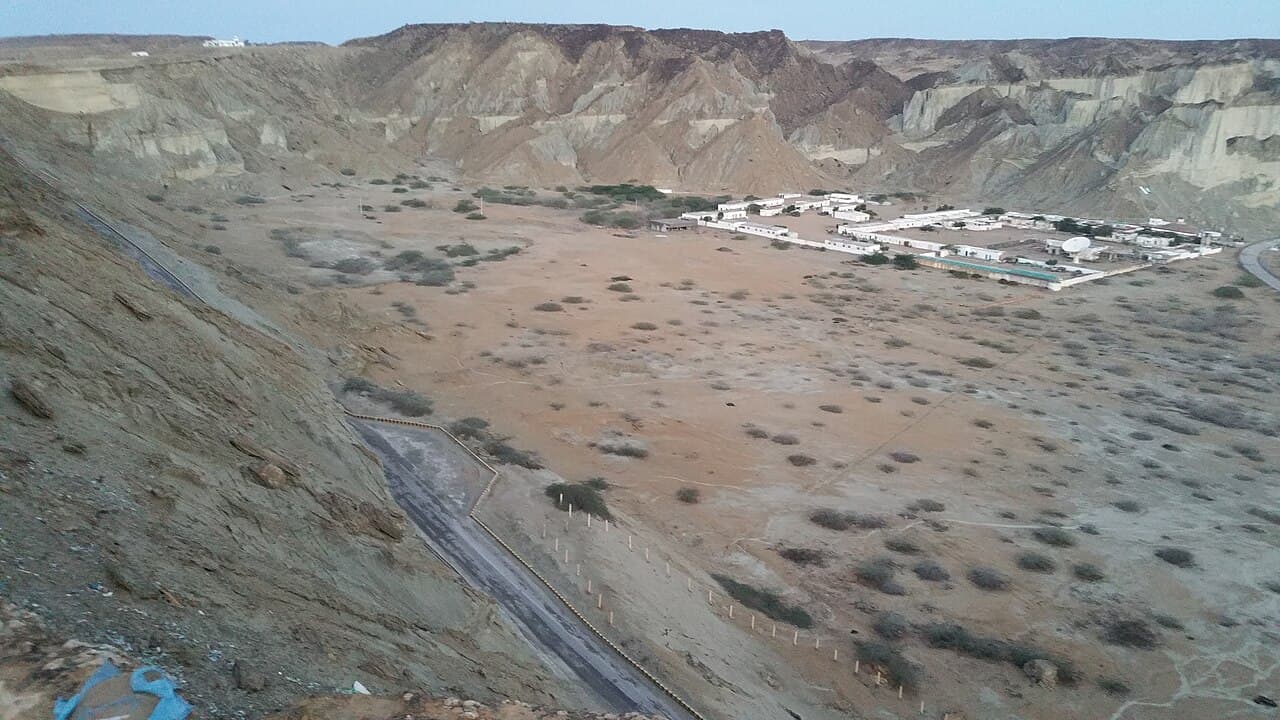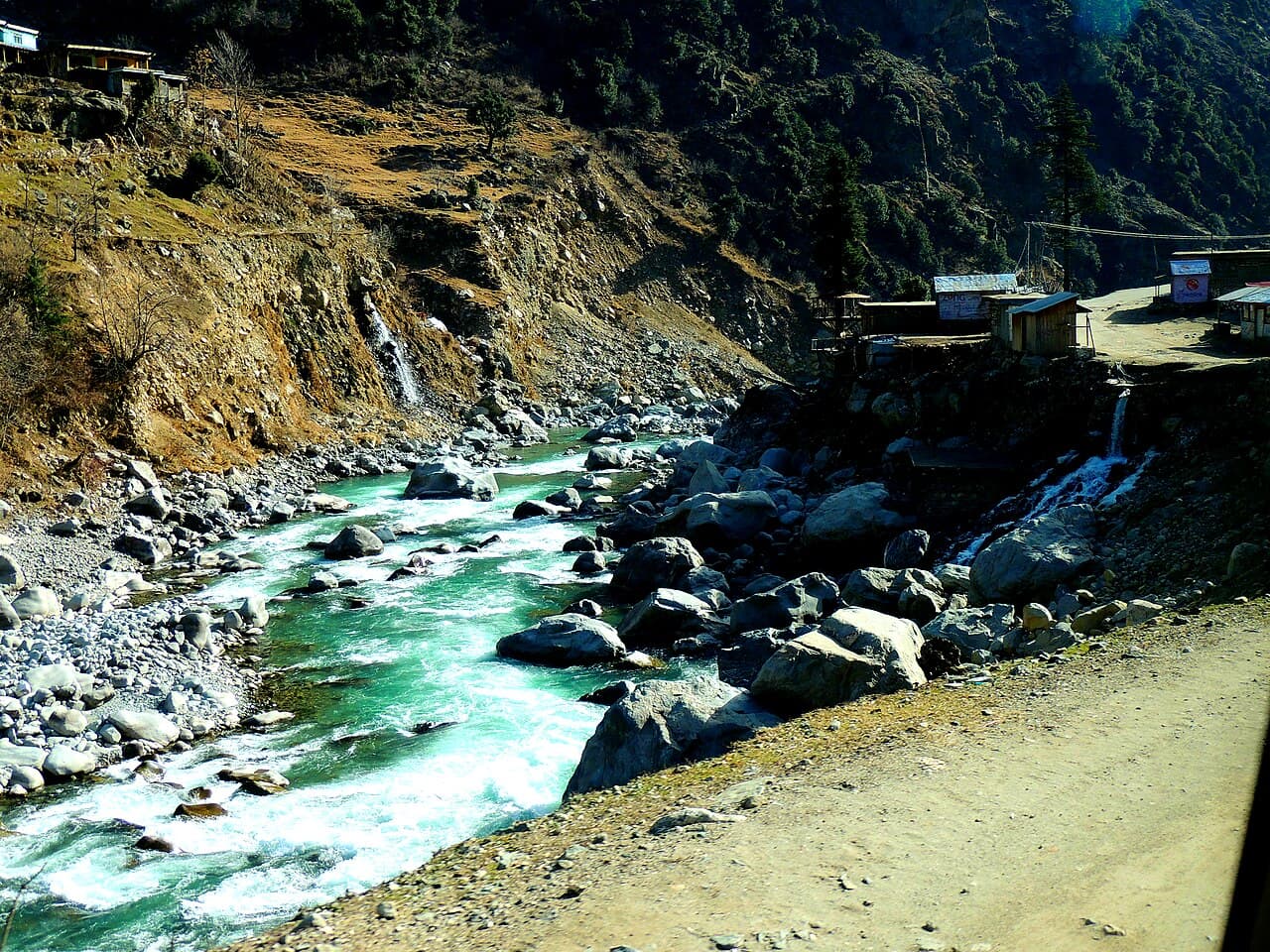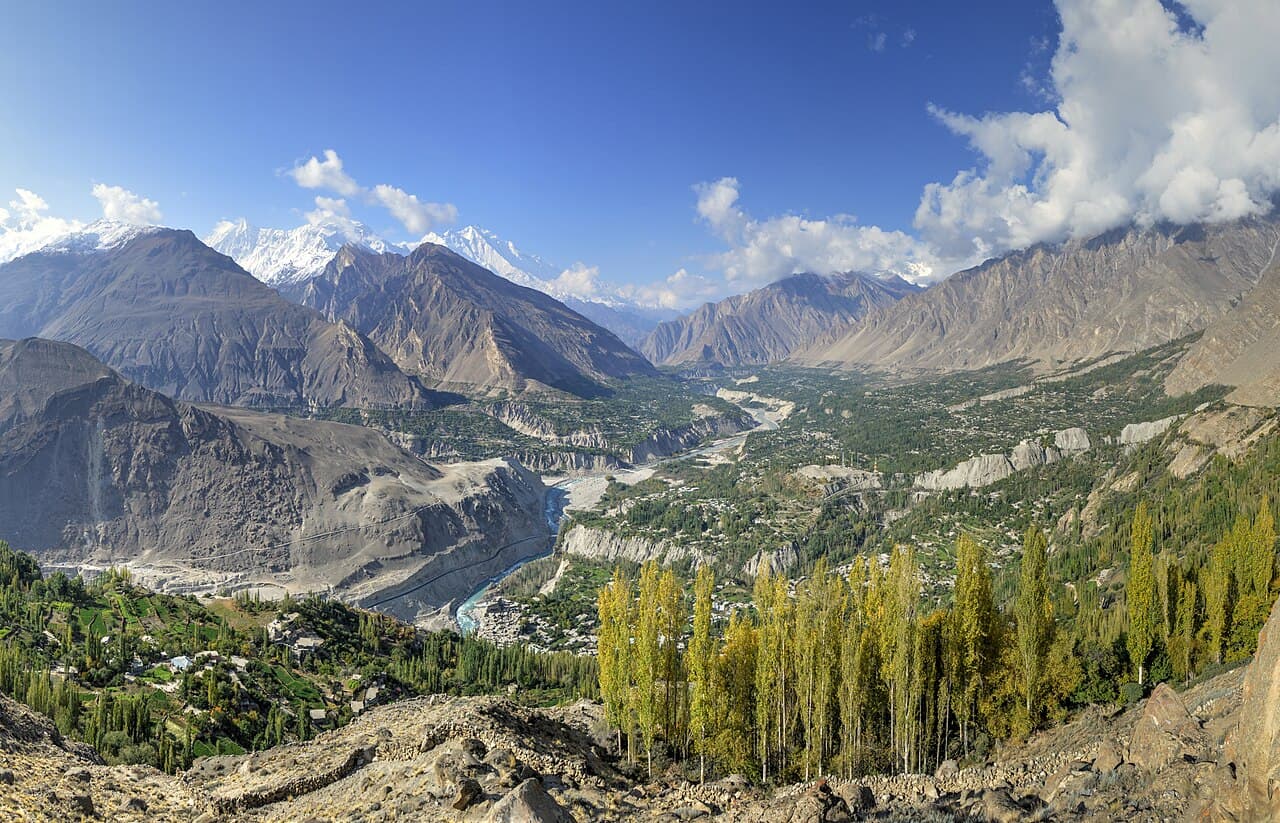
Heritage is not confined to masonry. It can live in the hands that form a clay instrument, the observations used to read a seasonal sky, the relationships involved in falconry or the gatherings that renew Nawrouz. These practices change because communities continue to perform and transmit them.
Pakistan's current UNESCO country record contains four inscribed intangible-cultural-heritage elements. The cover photograph shows Hunza Valley as broad northern landscape context, not a location claim for any one element described below.
At a glance
Start here
- Pakistan has four current UNESCO intangible-cultural-heritage inscriptions, split between two different lists.
- Boreendo and Suri Jagek are on the Urgent Safeguarding List, which signals transmission risks rather than inferior value.
- Falconry and Nawrouz are multinational Representative List inscriptions shared with other states.
- Respectful cultural travel begins with consent, correct community attribution and payment for authorised work or performance.
01
Four inscriptions, two UNESCO lists
As of the 2026 UNESCO country listing, Pakistan participates in four inscribed elements. Boreendo, or Bhorindo, entered the List of Intangible Cultural Heritage in Need of Urgent Safeguarding in 2025. Suri Jagek entered that list in 2018. Falconry was added through a multinational Representative List inscription involving Pakistan in 2021, and Pakistan joined the multinational Nawrouz inscription recorded in 2024.
The lists have different purposes. Urgent Safeguarding status identifies practices whose viability needs support; it is not a ranking of artistic merit. The Representative List increases visibility and awareness of intangible heritage. Neither designation makes a community practice public property or gives visitors automatic access to private teaching, ritual or performance.
- Urgent Safeguarding List: Boreendo and Suri Jagek.
- Representative List: Falconry and Nawrouz.
- Multinational inscription means participating countries share an element without claiming a single exclusive origin.
02
Boreendo carries music in fired clay
UNESCO describes the Boreendo or Bhorindo as a small spherical clay wind instrument with sound holes, rooted in village life in Thar. Making, decorating and playing it form one chain of knowledge. Treating the finished object as a souvenir while ignoring the craft and melodies would preserve only a shell of the element.
Its 2025 Urgent Safeguarding inscription draws attention to weakened transmission. A responsible encounter therefore favours an authorised maker or performer who can choose how the practice is explained. Pay the stated price for an instrument or performance, ask before recording and retain the maker's preferred name and place in any caption. Do not describe every clay whistle as Boreendo without confirmation.
Sources: UNESCO Intangible Cultural Heritage03
Suri Jagek reads time through sky and terrain
Suri Jagek is a Kalasha meteorological and astronomical knowledge practice in the valleys of Bumburet, Birir and Rumbur. UNESCO's 2018 decision describes observation of the sun, moon, stars, shadows and local topography to understand seasonal time and organise social activity. The landscape is not scenery around the practice; it is part of the observing system.
Urgent Safeguarding status reflects threats to transmission and the conditions needed to practise the knowledge. It does not license tourists to demand demonstrations or enter restricted spaces. Writers should identify the Kalasha community, use the element's proper name and avoid flattening living knowledge into a mysterious prediction ritual. If interpretation is community-led, listen for how observation, language, place and seasonal activity remain connected.
- Do not stage photographs at observation places without permission.
- Avoid publishing precise vulnerable locations when community guidance discourages it.
- Attribute explanations to authorised community or official safeguarding material.
04
Falconry is defined by relationships, not spectacle
Pakistan is one of the states participating in UNESCO's multinational Falconry, a living human heritage inscription. The Representative List framing emphasises knowledge, social practice and bonds developed around birds, landscapes and transmission. It should not be reduced to an exotic photograph of a raptor.
Ethical observation requires an authorised setting that puts bird welfare and practitioner rules first. Do not handle a bird, request flight displays or crowd a training space merely for content. A good account asks how knowledge is learned and how responsibilities are passed on, while avoiding unsupported claims that one demonstration represents all falconry communities across twenty-four participating countries.
Sources: UNESCO Intangible Cultural Heritage05
Nawrouz belongs to a shared cultural geography
The 2024 UNESCO record places Pakistan within a thirteen-country multinational Nawrouz inscription on the Representative List. The shared inscription is useful precisely because it resists an exclusive national ownership story. Communities express renewal through their own combinations of gathering, food, performance, visiting and seasonal meaning.
A traveller should follow the local form actually encountered rather than arrive with a universal checklist. Ask hosts what is public, what is familial and whether photography is welcome. Dates and programmes can vary by place and organiser, so this cultural overview does not invent a national event schedule. Current announcements are the appropriate source for attending a specific public celebration.
Sources: UNESCO Intangible Cultural Heritage06
Safeguarding is not the same as putting culture on display
A performance can create income and pride, but tourism can also detach practice from context or reward the version most convenient for outsiders. Safeguarding should strengthen the community's ability to transmit knowledge on its own terms. That may include apprenticeships, documentation, language use, access to materials or protection of the places needed for practice.
Visitors can support that aim by purchasing directly through legitimate channels, crediting practitioners, respecting refusals and not reposting restricted recordings. They should also avoid declaring a tradition dying based on one short encounter. Urgent Safeguarding is a formal UNESCO category supported by nomination evidence; it is not permission for dramatic obituary language.
- Consent covers recording and publication, not only attendance.
- Credit the practitioner or community in the wording they approve.
- Keep commercial use separate from personal permission unless both are explicitly granted.
07
Write living heritage in the present tense
Avoid describing communities as remnants of a vanished past. A clay instrument may be ancient in form and still be made by a contemporary artist. Seasonal observations may carry inherited knowledge and still respond to present conditions. Multinational practices can be locally distinctive without becoming sealed national brands.
Record the element name, list and inscription year, then centre the people who maintain it. Distinguish what an official source verifies from what a participant chooses to share. This produces a more accurate Pakistan story than a catalogue of costumes and ceremonies because it reveals transmission, adaptation and decision-making: the processes through which culture remains alive.
Sources: UNESCO Intangible Cultural Heritage; UNESCO Intangible Cultural Heritage; UNESCO Intangible Cultural HeritageUseful answers
Reader questions
How many UNESCO intangible heritage elements does Pakistan currently have?
UNESCO's country listing records four: Boreendo, Suri Jagek, Falconry and Nawrouz. The first two are on the Urgent Safeguarding List; the latter two are Representative List inscriptions.
Sources: UNESCO Intangible Cultural HeritageDoes Urgent Safeguarding mean a practice has disappeared?
No. It means the element is living but its viability requires urgent measures. Communities, skills and transmission remain central; the label should not be rewritten as extinction.
Sources: UNESCO Intangible Cultural Heritage; UNESCO Intangible Cultural HeritageCan visitors freely record an inscribed practice?
UNESCO recognition does not replace consent. Ask the practitioner or community whether attendance, photography, audio, video and later publication are each acceptable, especially in private or sacred contexts.
Sources: UNESCO Intangible Cultural Heritage; UNESCO Intangible Cultural HeritageRead the evidence
Sources and further reading
These sources support the relevant sections above. Plans and comparisons are editorial suggestions. Check operators for current arrangements.
- Pakistan - UNESCO Intangible Cultural Heritage ↗UNESCO Intangible Cultural Heritage · Accessed 14 September 2026
Current country record of four inscribed elements and their list categories and years.
- Boreendo, Bhorindo, Ancient Dying Folk Musical Instrument, Its Melodies, Knowledge and Skills ↗UNESCO Intangible Cultural Heritage · Accessed 14 September 2026
2025 Urgent Safeguarding inscription, clay instrument form, Thar context, making, decorating, melodies and transmission.
- Decision of the Intergovernmental Committee: 13.COM 10.a.6 ↗UNESCO Intangible Cultural Heritage · Accessed 14 September 2026
2018 Urgent Safeguarding inscription, Kalasha community, named valleys and observation of celestial bodies, shadows and topography.
- Falconry, a Living Human Heritage ↗UNESCO Intangible Cultural Heritage · Accessed 14 September 2026
Pakistan's participation in the 2021 multinational Representative List inscription and its living-heritage framing.
- Browse the Lists of Intangible Cultural Heritage and the Register of Good Safeguarding Practices ↗UNESCO Intangible Cultural Heritage · Accessed 14 September 2026
Pakistan's participation in the thirteen-country Nawrouz Representative List inscription recorded in 2024.