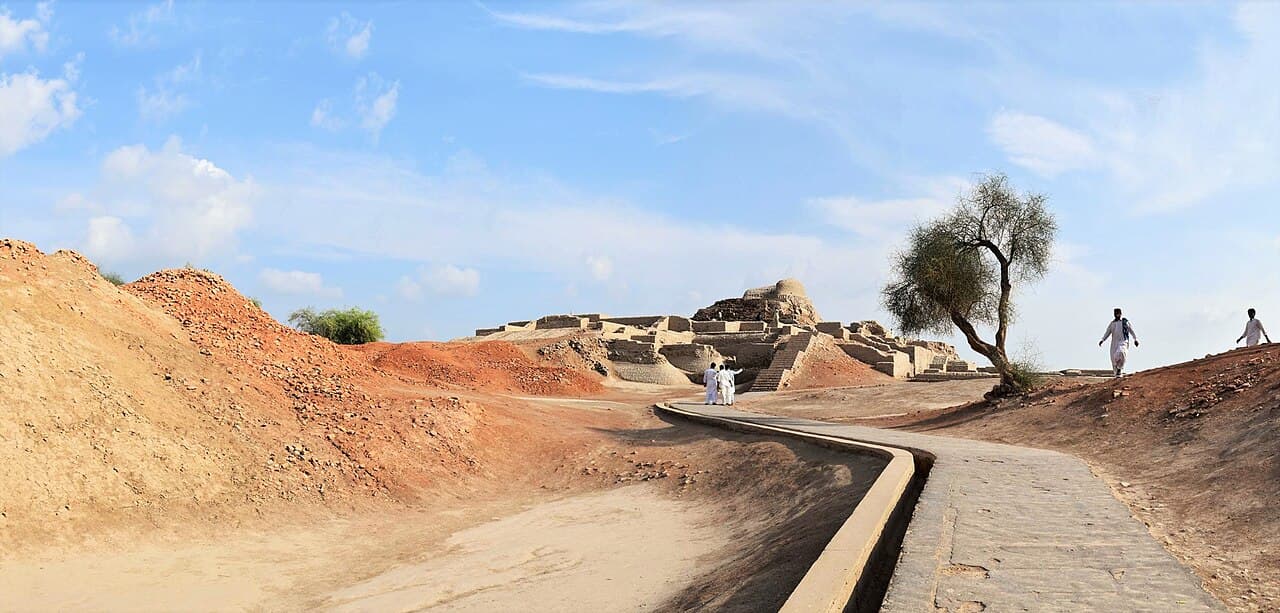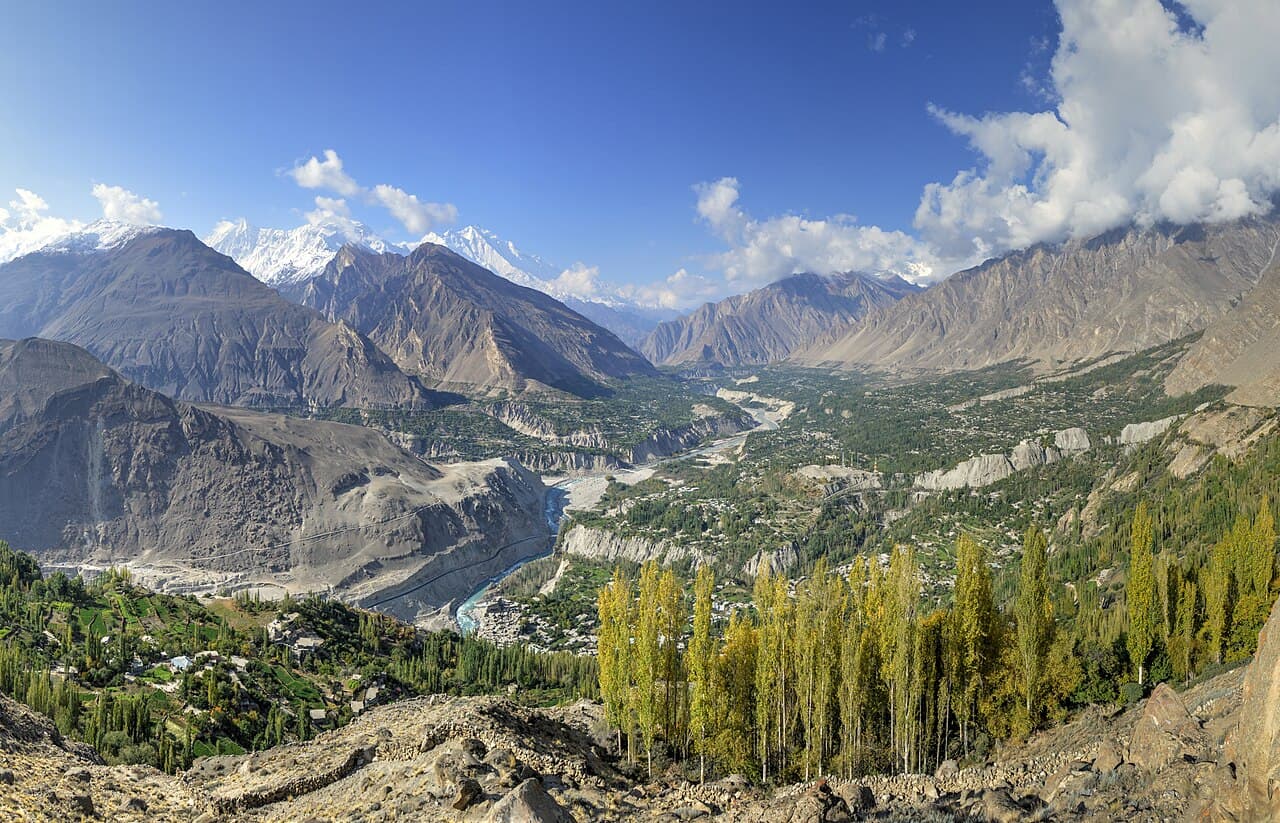
Hunza Valley is the destination that converts sceptics. Travellers who arrive doubting Pakistan's tourism potential leave having rearranged their understanding of what "beautiful" means. Terraced apricot orchards cascading down from 7,000-metre peaks, a lake so blue it looks photoshopped, forts that predate the Mughal Empire by a thousand years, and people who invite you for tea before you have finished asking for directions. Here is the complete practical guide for 2026.
Getting to Hunza from Islamabad
There are two options: fly to Gilgit and drive the final stretch, or take the full KKH road journey from Islamabad. Both have distinct pros and cons.
Option 1 — Fly to Gilgit (Recommended for Time-Constrained Visitors)
The flight from Islamabad International Airport (IATA: ISB) to Gilgit Airport (IATA: GIL) takes approximately 45 minutes and is one of the world's most spectacular mountain flights — the approach curves between the giants of the Karakoram and Himalaya ranges. From Gilgit, it is a 2-hour drive to Karimabad, Hunza's main tourist town.
- Operators: PIA (Pakistan International Airlines) and Air Sial both operate this route.
- Fare: PKR 12,000–18,000 one way depending on timing and availability. Book at least 2 weeks in advance; this route sells out, especially in cherry blossom season (late March–mid April).
- The catch — cancellations: Gilgit Airport has no instrument landing capability. If there is cloud cover over the valley (which is frequent, especially October–February), the flight is cancelled. On some routes cancellation rates run 3–4 days per week in uncertain weather seasons. Always build 2 extra days of buffer into your schedule around this flight. Book refundable fares or budget airlines with flexible policies.
- Baggage: Small aircraft limit to 15–20kg check-in plus 7kg hand luggage. Do not arrive with 30kg of gear — you will pay significant excess baggage fees.
- Booking: Via PIA's website (pia.aero) or through a local agent. Air Sial tickets available at airsial.com. Google Flights does not reliably index these routes — book direct.
Option 2 — KKH Road Journey (Recommended for the Full Experience)
The Karakoram Highway from Islamabad to Karimabad covers approximately 600 km and takes 14–16 hours in a private vehicle or 16–18 hours by NATCO public bus. It is one of the great road journeys on earth — and it is also genuinely tiring. Most travellers who do the road one-way (typically southbound on the return, when the views are familiar and fatigue is manageable) report it as a highlight of their trip.
- NATCO Bus: Government-operated coach service from Rawalpindi's Pir Wadhai bus terminal. Departs at approximately 6 am and 8 am. Fare: PKR 1,800–2,200 depending on seat class. Book in person 1–2 days in advance at the terminal. Seats go fast in season. Basic comfort, reliable, the authentic way to do the route. NATCO buses stop at Besham, Chilas, and Gilgit — meals at roadside dhabas (basic but good).
- Private Car Hire: PKR 18,000–25,000 one way for a Suzuki Jimny or Toyota Hilux with a driver who knows the KKH. Arrange via your hotel in Islamabad or a reputable Gilgit-Baltistan tour operator. Private car allows stops at any viewpoint, more flexibility on timing, and far more comfort. Split across 3–4 people, the per-person cost is competitive with the bus.
- Important road note: Drive daytime only on the KKH. The road has no barriers in long stretches, landslides are unpredictable, and mountain driving at night is significantly more dangerous. The stretch between Chilas and Gilgit requires particular attention — narrow road, river gorge to one side, loose rock above. Sit on the mountain side of the vehicle.
Where to Stay in Hunza
Karimabad is the main base for Hunza Valley tourism. It sits at 2,438m elevation with views of Rakaposhi (7,788m) and Ultar Sar (7,388m) from most properties. Accommodation ranges from backpacker guesthouses at PKR 1,500–2,500/night to the Serena at the upper end.
Budget (PKR 1,500–4,000 / night)
- Old Hunza Inn — One of Karimabad's most reliable budget options. Family-run, rooftop terrace with Rakaposhi views, good home-cooked meals. Dorms from PKR 1,500, private rooms PKR 2,500–4,000. Book direct; they respond via WhatsApp.
- Diran Guest House — Simple rooms, honest prices, excellent chapli kebabs at dinner. PKR 2,000–3,000/double. Popular with trekkers heading to Ultar Base Camp.
- Hilltop Hotel — Slightly higher up the hillside, excellent mountain views from the restaurant. PKR 2,500–3,500. Sometimes fully booked in peak cherry blossom season — reserve 3–4 weeks ahead for late March/April.
Mid-Range (PKR 6,000–15,000 / night)
- Eagle's Nest Viewpoint Guesthouse — At 2,900m elevation above Duikar village, this is arguably the best view in the Hunza Valley — a sweeping panorama of the entire valley floor, Baltit and Altit forts visible below, and at dawn, the peaks glow rose-gold before the valley floor wakes. Rooms PKR 8,000–12,000. The restaurant is basic but the location earns every rupee. Access is via a 3 km uphill jeep track from Karimabad — arrange pickup or hire a local jeep taxi (PKR 500–800 each way).
- Hunza Serena Inn — Serena Hotels' property in Karimabad. Stone-built architecture blending with the landscape, well-maintained rooms, reliable hot water. PKR 12,000–18,000/double in peak season. The property's terrace has one of the best Rakaposhi views in town.
Splurge (PKR 18,000–35,000 / night)
- Serena Hunza — Full Serena experience: room service, trained staff, the most reliable WiFi in the valley, breakfast included. PKR 18,000–25,000/double. Worth the premium for business travellers or those who genuinely value reliable infrastructure.
- Luxus Hunza — Newer property at the higher end of the market. Modern rooms, pool (seasonal), panoramic mountain views. PKR 22,000–35,000. Often used by group tours.
What to See and Do
Baltit Fort (PKR 600 entry)
The ancestral home of the Mirs of Hunza, Baltit Fort dates to the 8th century in its earliest sections with major reconstructions in the 16th century under Timurid architectural influence. The Aga Khan Trust for Culture conducted a decade-long restoration completed in 1996 that preserved the original structure while making it safely accessible. The fort now contains original artefacts, royal chambers with painted ceilings, and roof terraces with views that put most mountain viewpoints to shame. Allow 1.5–2 hours. Audio guides available in English (PKR 100 extra). Open daily 9 am–6 pm in summer, reduced hours in winter.
Altit Fort (PKR 400 entry)
Older than Baltit by several centuries (foundations date to approximately 900 CE), Altit is the less-visited of Hunza's two major forts and arguably the more atmospheric for it. It clings to a cliff edge above the Hunza River gorge with vertigo-inducing views down 300 metres of sheer rock. The adjacent Altit village is one of the best-preserved traditional Hunza settlements. Allow 1.5 hours. Combine Altit and Baltit in a single half-day.
Attabad Lake (Boat: PKR 500 / person)
Attabad Lake was created in 2010 when a catastrophic landslide blocked the Hunza River and submerged the village of Attabad and several kilometres of the old KKH. The result is a 21 km turquoise lake of surreal colour — the suspended glacial minerals in the water produce a blue that photographs cannot adequately represent. The new KKH passes through five tunnels blasted through the mountain above the lake (one of Pakistan's major infrastructure achievements, completed 2015). Short boat rides are available from the eastern shore (PKR 500/person for a 20-minute tour) or you can hire a full boat for PKR 2,500–3,000 for a longer exploration. The western end of the lake, where the original submerged villages are partially visible below the surface, is particularly striking.
Passu Cones (Free; 2-hour hike)
The Passu Cathedral — a row of cathedral-like granite spires rising sharply from the valley floor — is 45 km north of Karimabad and one of Pakistan's most iconic landscapes. A guesthouse in Passu village serves as the trailhead for hikes with views of both the Passu Glacier and the cones. The approach hike up the moraine takes approximately 2 hours return and is suitable for any fit hiker with good footwear. No technical equipment required. The famous Hussaini Suspension Bridge — wooden planks over the Hunza River, swaying 100 metres above the water — is 2 km from Passu village and is entirely crossable (though thrilling). Combine Attabad Lake, Passu Cones, and Hussaini Bridge in a single day trip by hiring a local jeep from Karimabad (PKR 3,500–5,000 full day).
Borith Lake
A high-altitude lake at 2,800m near Gulmit village, 30 km north of Karimabad. Seasonal (full May–October, partially frozen November–April). The surrounding wetland is a birdwatcher's destination — bar-headed geese and Himalayan griffon vultures are commonly sighted. Accessible by jeep track from the KKH; an easy 45-minute walk from the road to the lake shore. Entry free.
Cherry Blossom Season: Timing and What to Expect
Cherry blossom season in Hunza is late March to mid-April with peak bloom typically in the first two weeks of April (though this shifts slightly year to year with temperature). The apricot orchards bloom slightly earlier (mid-March) and the cherry trees follow. The valley floor turns pink and white against the snow-capped peaks — the combination is genuinely one of Asia's great seasonal spectacles. This is high season: accommodation fills 6–8 weeks in advance and prices run 30–50% higher than shoulder season. If this is your target window, book accommodation and any domestic flights by early February.
ATM Warning: Bring Cash from Gilgit
This is one of the most practically important pieces of information in this guide. Karimabad has two ATMs — one in the main bazaar area (HBL) and one near the Serena — and both are frequently empty, particularly on weekends and during peak season. There are no bank branches in most smaller towns in GB. Cards are accepted at the Serena and Luxus hotels and a small number of established restaurants; everywhere else is cash only.
The rule: Withdraw all the cash you will need for your Hunza stay in Gilgit before continuing north. Gilgit city has multiple functioning ATMs (HBL, MCB, UBL, Bank Alfalah) and is the last reliable banking point. Budget conservatively: PKR 3,000–4,000/day for a mid-range traveller (accommodation, meals, local transport). For a 5-day Hunza stay, bring PKR 20,000–25,000 minimum as cash reserve beyond your expected budget.
Altitude Acclimatization Note
Karimabad sits at 2,438m — not extreme altitude but sufficient to cause mild symptoms in susceptible individuals within 24–48 hours (headache, fatigue, disrupted sleep). If you fly from Islamabad to Gilgit and drive immediately to Karimabad, you have ascended from ~500m to 2,438m in a few hours. Take the first day easy: walk slowly, avoid alcohol (it accelerates dehydration and impairs acclimatization), drink extra water, and do not push immediately to higher elevation day hikes. For the Khunjerab Pass day trip (4,693m), acclimatize for at least 2 nights in Karimabad first. If you feel symptoms worsening — particularly headache that does not respond to paracetamol, loss of appetite, or breathlessness at rest — descend. Altitude sickness does not improve with waiting at elevation.