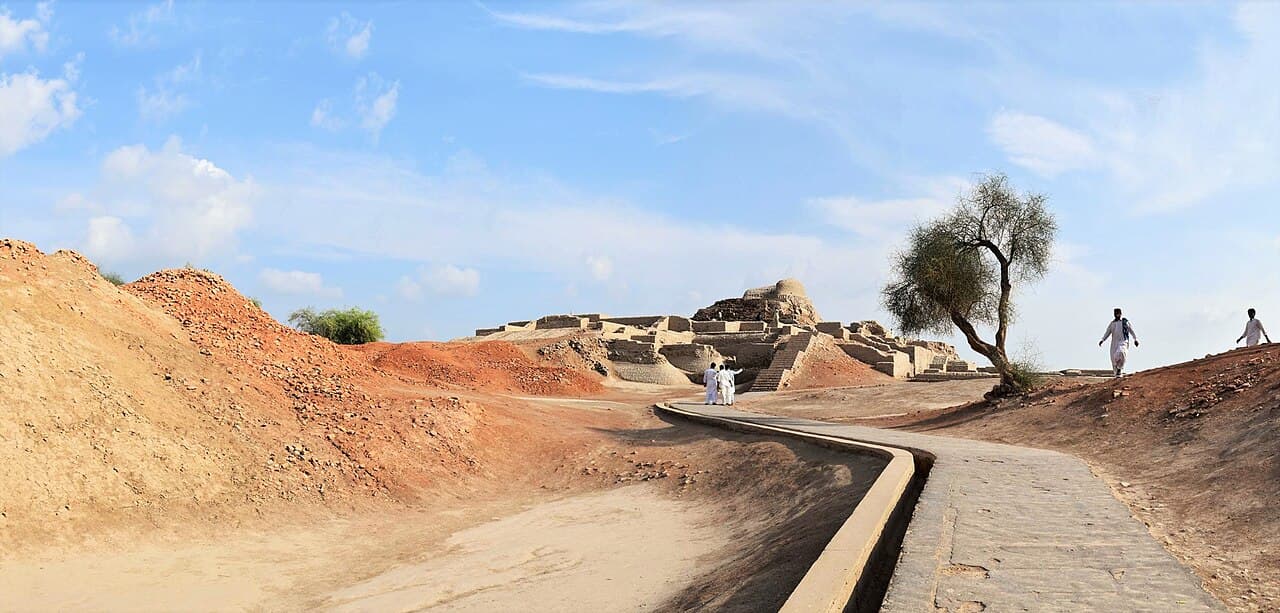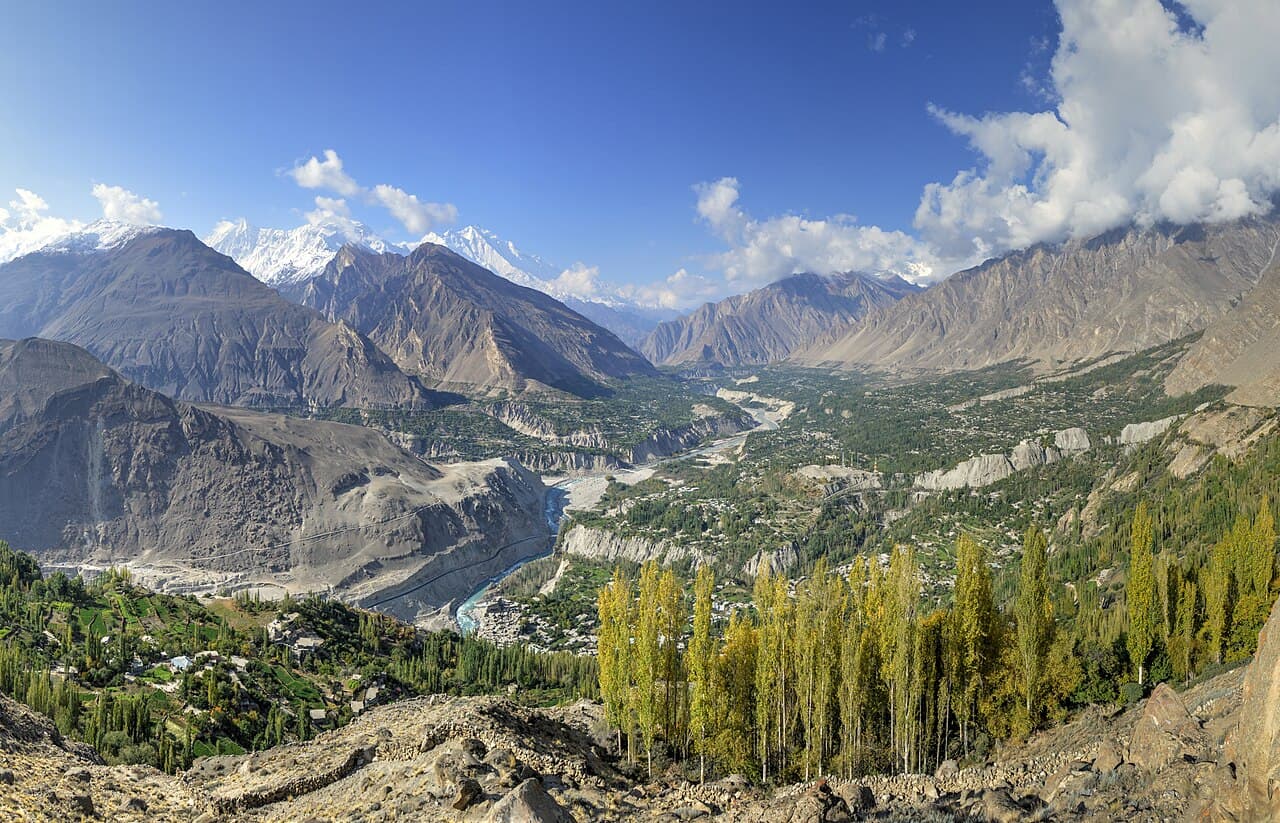
Pakistan contains more high-altitude trekking terrain than almost any other country on Earth. The Karakoram, Himalaya, and Hindu Kush ranges converge here, creating an unbroken wall of peaks that includes five of the world's fourteen 8,000-metre mountains. The trekking ranges from a two-hour morning hike accessible to any reasonably fit person to gruelling two-week expeditions that push experienced alpinists to their limits. What follows is an honest guide to seven routes — one for each level of fitness and commitment — with the real numbers on cost, timing, and what you will actually encounter on the trail.
Route 1 (Easy): Margalla Trail 5, Islamabad — 2–3 Hours
Difficulty: Easy. Duration: 2–3 hours. Best Season: October–April. Permit Required: No. Cost: Free.
The Margalla Hills National Park sits on Islamabad's northern boundary, a forested ridge visible from much of the capital. Trail 5 climbs through forest to viewpoints over the city. Reach the trailhead by licensed taxi or a currently operating ride-hailing service, confirm access and weather with park authorities, and verify route distance and elevation against the current trail map before setting out.
This is an ideal acclimatisation and fitness-check hike for travellers planning more serious routes in Gilgit-Baltistan. It is also genuinely enjoyable in its own right, especially in spring (March–April) when the wildflowers are out and the visibility is at its clearest before the summer haze settles.
Route 2 (Easy-Moderate): Borith Lake, Passu — Half Day
Difficulty: Easy-Moderate. Duration: 4–5 hours return. Best Season: May–October. Permit Required: No. Cost: Free. Base: Passu village (guesthouse PKR 2,500–4,000/night).
Borith Lake is a small high-altitude lake above Passu village in upper Hunza, surrounded by the Batura and Passu glaciers on three sides. The walk from Passu village gains approximately 150 m elevation over 5 km of relatively gentle trail through glacial moraine and high-altitude scrub. The lake itself is a vivid turquoise-green fed by glacial melt, with the jagged Passu Cathedral Cones reflected in the water on calm mornings. This is one of the most photogenic short hikes in Pakistan and requires no technical ability whatsoever. The trail is well-used by local shepherds and easily navigated without a guide. Start before 9 am to catch the best light and the calmest lake surface before afternoon winds pick up.
Route 3 (Moderate): Fairy Meadows and Nanga Parbat Base Camp — 2 Days
Difficulty: Moderate. Duration: 2 days. Best Season: May–September. Permit Required: No (for Fairy Meadows). Cost: PKR 3,000–5,000 for jeep from Raikot Bridge + PKR 2,000–4,000 guesthouse/camping. Base: Fairy Meadows guesthouse or tent camp.
Fairy Meadows is one of Pakistan's most famous viewpoints — a high alpine meadow at 3,300 m directly facing the Raikot face of Nanga Parbat (8,126 m), the world's ninth-highest mountain. Access requires a bumpy 13 km jeep track from Raikot Bridge on the KKH (shared jeep PKR 1,500 per person; private hire PKR 5,000–7,000), followed by a 3-hour uphill hike through pine forest. The meadow has permanent wooden guesthouses (the Raikot Sarai charges PKR 2,500–3,500 for bed and meals) and tent camping sites. A second day's hike from Fairy Meadows to Nanga Parbat Base Camp (4,200 m) takes 4–6 hours and reaches a point directly beneath one of the most dramatic mountain walls on Earth — the Raikot face drops 4,600 vertical metres from summit to base, the greatest single mountain face on the planet.
This is a serious hike on day two — elevation gain of approximately 900 m on loose rocky trail — but requires no technical equipment. Good boots are essential. The altitude gain from PKR to 4,200 m should be taken slowly; altitude sickness is possible and descent is the only cure.
Route 4 (Moderate): Rakaposhi Base Camp, Nagar — 2–3 Days
Difficulty: Moderate-Strenuous. Duration: 2–3 days. Best Season: June–September. Permit Required: No. Cost: PKR 8,000–15,000 (guide + camping). Base: Minapin village, Nagar District.
Rakaposhi (7,788 m) is one of the most visible peaks in all of Gilgit-Baltistan — it looms over the Karakoram Highway between Gilgit and Hunza with a prominence that makes it feel close enough to touch. The base camp trek begins at Minapin village (take a shared van from Gilgit for PKR 200–300, get off at the Minapin junction). The trail climbs steeply through Minapin Glacier moraine to a high camp at approximately 3,800 m, with views of Rakaposhi's southwest face filling the entire sky. A guide from the village is strongly recommended (PKR 2,000–3,000 per day) — the trail is well-used but route-finding becomes complex near the glacier. Camping at the base camp on night two, with the mountain overhead, is a defining Pakistan trekking experience.
Route 5 (Strenuous): Gondogoro La Pass, Hushe Valley — 8–10 Days
Difficulty: Strenuous. Duration: 8–10 days. Best Season: July–August. Permit Required: Yes (Baltistan trekking permit, approx. PKR 5,000 from DC Skardu). Cost: PKR 60,000–120,000 total (guide, porter, camping, permits). Base: Hushe village, Baltistan.
The Gondogoro La (5,940 m) is a high glaciated pass in the Karakoram that offers what is widely considered the single most spectacular viewpoint accessible on a non-technical trek in Pakistan. From the pass, five 8,000-metre peaks are visible simultaneously: K2, Broad Peak, Gasherbrum I, Gasherbrum II, and Gasherbrum IV. The route begins at Hushe village (reached by jeep from Skardu, PKR 4,000–6,000 one way) and follows the Gondogoro Glacier to the pass before descending to Concordia — the confluence of the Baltoro Glacier — where K2 appears in full profile. This is a serious undertaking requiring crampon technique and rope skills for the final snow and ice sections to the pass itself; the descent to Concordia is steep and potentially icy. It is not a hike for the unprepared but it is accessible to any fit, experienced trekker with proper guiding.
Route 6 (Very Strenuous): Baltoro Glacier to Concordia — 14–16 Days
Difficulty: Very Strenuous. Duration: 14–16 days. Best Season: July–August. Permit Required: Yes (Baltoro Restricted Zone permit, PKR 15,000–25,000). Cost: PKR 150,000–300,000 (guide, multiple porters, full camping kit, permits).
The Baltoro Glacier trek to Concordia is the most famous trek in Pakistan and one of the most famous in the world. The route follows the Braldu River from Askole village (the last road-accessible point) up the Baltoro Glacier — the world's longest non-polar glacier at 57 km — past the Cathedral Towers, Trango Towers, and Masherbrum to the spectacular amphitheatre of Concordia, where K2 (8,611 m) rises in a perfect cone directly ahead. The scenery is on a scale that defeats language: 60+ km of continuous glaciated terrain surrounded by more 7,000-metre and 8,000-metre peaks than anywhere else on Earth.
This trek requires significant advance planning. Porters must be hired from Askole (standard rate: PKR 2,500–3,500 per day per porter; most parties hire 2–4 porters for two trekkers). A government-licensed guide is mandatory. Full camping equipment for two weeks including cold-weather sleeping kit down to -10°C is required — some can be rented in Skardu (Concordia Camp is a reliable outfitter). Book guides through Adventure Tours Pakistan or Walji's Adventures in Islamabad, both with decades of Baltoro experience.
Route 7 (Extreme): K2 Base Camp — 18–22 Days
Difficulty: Extreme. Duration: 18–22 days. Best Season: July–August only. Permit Required: Yes (Baltoro Restricted Zone + additional K2 Base Camp permit). Cost: PKR 300,000–600,000+ (guide, 4–6 porters, full expedition camping kit, permits, helicopter evacuation insurance).
K2 Base Camp (5,100 m) extends the Concordia route a further day north along the Godwin-Austen Glacier to the base of the world's second-highest and most technically demanding mountain. K2's north face — a pyramid of rock and ice that climbers have died attempting since 1902 — fills the view from base camp in a way that even those who have seen photographs in books describe as shocking in person. The elevation, the glacier travel, the cold (-15°C at night even in July), and the physical distance from any emergency care make this the most serious undertaking in this list.
Helicopter evacuation insurance (minimum USD 10,000 coverage) is not optional — it is a moral obligation to the rescue teams who would otherwise risk their lives for free. This is available through international travel insurers; confirm explicitly that trekking above 5,000 m is covered. All other permits and logistics are identical to the Baltoro trek above, with added quantities. But those who reach K2 Base Camp and stand beneath the mountain for even one clear morning universally describe it as among the most profound physical and psychological experiences of their lives. Pakistan has no tourism attraction that competes with this, because nothing else on Earth compares to standing at the base of K2.
General Trekking Logistics
- Guide agencies: Adventure Tours Pakistan (Islamabad), Walji's Adventures (Islamabad), Karakoram Explorers (Gilgit). Always use registered, licensed guides on serious routes.
- Gear rental in Skardu: Crampons PKR 500/day, ice axe PKR 400/day, sleeping bag (rated -15°C) PKR 600/day, trekking poles PKR 200/day. Concordia Camp and Skardu Adventure are reliable rental shops.
- Porter etiquette: The standard load is 25 kg including the porter's own kit. Pay the government-regulated daily rate (check with the Gilgit-Baltistan Tourism Department for current rates, updated annually). Provide or supplement high-altitude gear — shoes, gloves, sun protection — for porters on glaciated routes. They are skilled mountain professionals; treat them accordingly.
- Emergency contacts: GB Rescue (Gilgit): +92-5811-920102. Pakistan Army Aviation (Rawalpindi): emergency helicopter coordination. Register your trekking route with the Gilgit-Baltistan Tourism Department before departure on all serious routes.