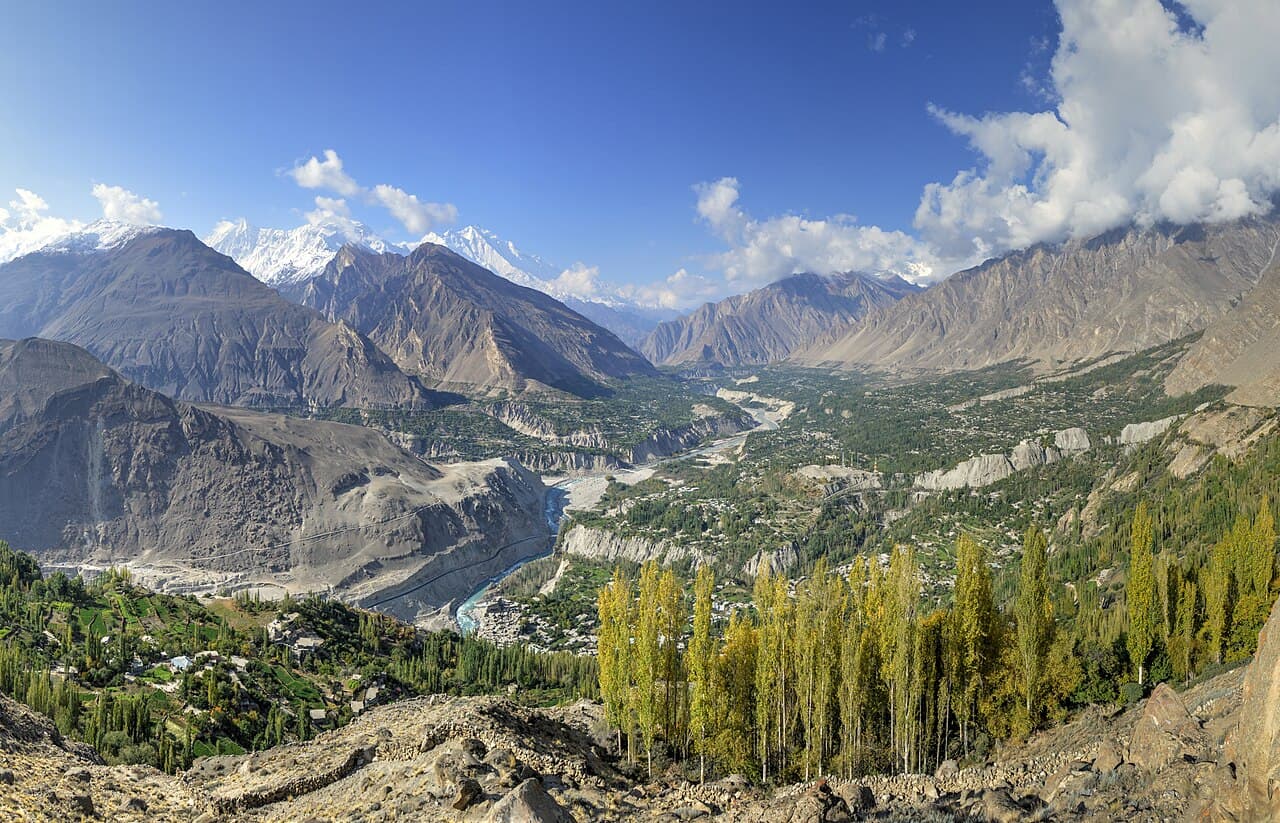
Pakistan's mainstream tourist circuit — Lahore's Walled City, Hunza Valley, Islamabad's Faisal Mosque, the Khyber Pass — is mainstream for good reason. These are genuinely magnificent places. But the country is vast, and the spots that see fewer foreign footprints are often the ones that stay with you longest. These are eight destinations that most visitors miss entirely.
1. Kel and Arang Kel, Azad Kashmir
Arang Kel is often called Pakistan's most beautiful village, and the claim holds up. Perched on a cliff above the Neelum Valley in Azad Kashmir, it is accessible only by a chairlift ride and a 45-minute uphill hike from Kel. The village — a cluster of wooden houses on a high alpine meadow with views down to the river gorge below — sees a fraction of the traffic that Hunza receives. The Neelum Valley road from Muzaffarabad to Kel is itself a journey worth making: three to four hours of switchbacks through dense forest alongside a rushing glacial river.
2. Gorakh Hill Station, Sindh
Most people think of Sindh as flat desert and the lower Indus plain. They have never been to Gorakh Hill Station. At 1,734 m in the Kirthar Range of northwestern Sindh, Gorakh gets snowfall in winter — something that surprises visitors who associate the province purely with heat. The plateau offers sweeping views across the Indus plain and extraordinary stargazing on clear nights. Access is via a jeep track from Khuzdar or Dadu; the journey is half the adventure.
3. Katpana Desert (Cold Desert), Skardu
Fifteen minutes from Skardu city lies one of the world's only cold deserts — a landscape of white sand dunes rising to 2,226 m above sea level, ringed by snow-capped peaks. The Katpana Desert sits in a rain shadow created by the surrounding Karakoram and Himalayan ranges, giving it an otherworldly quality: drifting sand dunes in one direction, glaciated 7,000-metre peaks in another. Sunrise here, with the dunes turning golden and K2 faintly visible on clear days, is surreal.
4. Hingol National Park and the Makran Coast, Balochistan
Pakistan has 1,046 km of Arabian Sea coastline, but almost none of it is on the standard tourist circuit. Hingol National Park — the largest national park in Pakistan — protects a dramatic stretch of the Makran coastal highway in Balochistan. The park contains mud volcanoes, the extraordinary Princess of Hope rock formation, and the Kund Malir beach, where golden cliffs meet turquoise water in a scene that belongs in a different country entirely. The drive along the Coastal Highway from Karachi to Gwadar is one of Pakistan's great road trips.
5. Deosai National Park
At an average elevation of 4,114 m, Deosai is the world's second-highest plateau. In June and July, it transforms into an endless high-altitude meadow carpeted with wildflowers — purple campanula, yellow potentilla, and patches of edelweiss. Brown bears roam freely; the Deosai population is the largest sub-population of Himalayan brown bear remaining in Pakistan. The plateau is accessible from both Skardu and Astore, and the drive across it in a jeep — with no trees, no buildings, nothing but sky and flowers in every direction — is an experience of rare spaciousness.
6. Tharparkar Desert, Sindh
The Thar Desert extends from Rajasthan in India into southeastern Sindh, and the Pakistani side — centered on the town of Mithi — is entirely unlike anywhere else in the country. This is Pakistan's most culturally diverse district: Hindus, Muslims, and indigenous Thari communities have coexisted here for centuries, and the architecture, music, and food reflect that layered heritage. The desert's sand dunes, ancient step-wells, and elaborately decorated village houses are best visited in winter (November–February). The Rann of Kutch salt flats shimmer at the southern edge of the desert.
7. Kalash Valleys, Chitral
The three Kalash Valleys — Bumburet, Rumbur, and Birir — in Chitral District are home to the Kalasha people, one of the few remaining pre-Islamic indigenous communities in South Asia. With a population of around 4,000, the Kalasha maintain distinct traditions, a polytheistic religion, and a culture of music, dance, and wine-making that is unlike anything else in Pakistan. Visiting during one of the three major Kalasha festivals (Chilam Joshi in May, Uchal in August, or Chaumos in December) means witnessing ceremonies unchanged for centuries. Access is by a 45-minute drive from Chitral town on a mountain road.
8. Ranikot Fort, Sindh
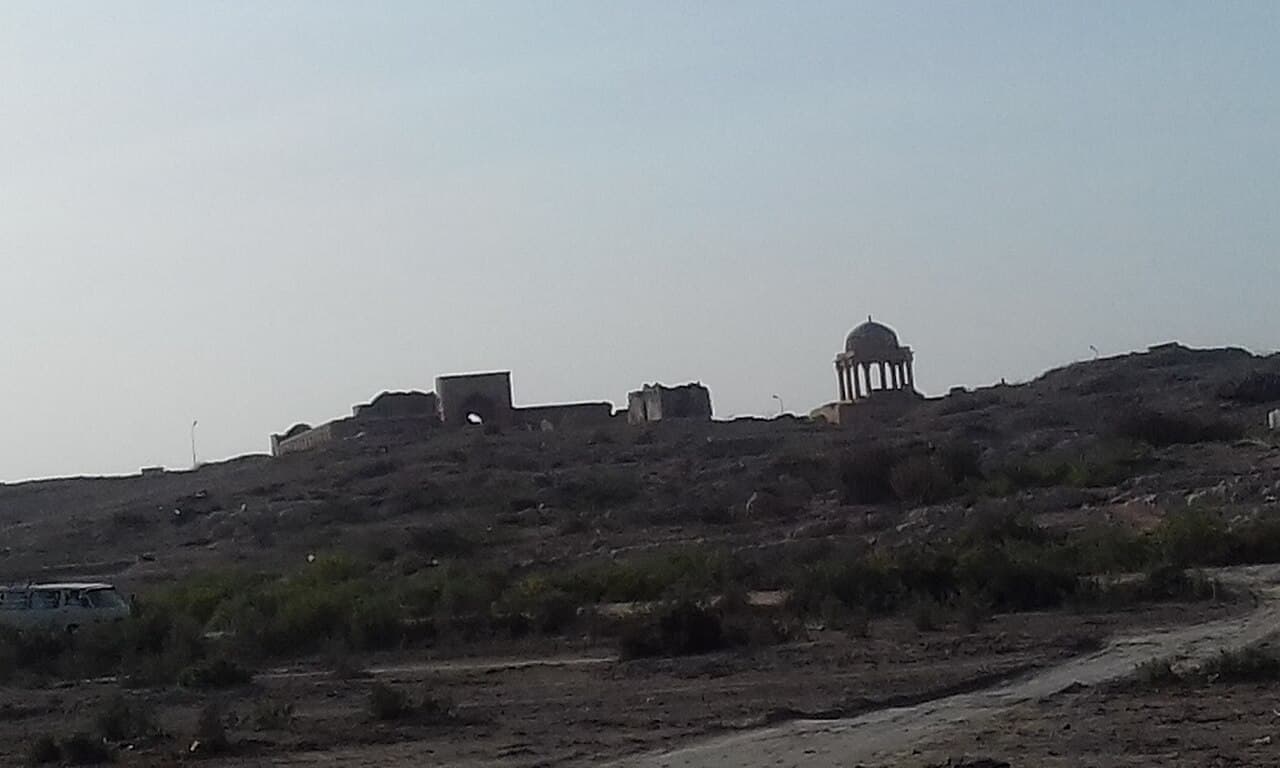
Often called the Great Wall of Sindh, Ranikot Fort near Sann in Jamshoro District has a perimeter of approximately 32 km — making it potentially the world's largest fort. The origins of Ranikot are debated; theories range from Sasanian Persia to the Talpur Mirs of Sindh. What is certain is that walking its crumbling sandstone ramparts through barren hills with almost no other visitors present is an experience of profound, undiluted history. Most tour groups in Pakistan have never heard of it. That alone is reason enough to go.