Let us be honest from the start: Pakistan sits near the top of the list of countries that solo female travellers are warned away from. Foreign office advisories are cautious, media coverage is almost universally negative, and the cultural distance from Western travel norms is real. None of that should stop you — but all of it is worth understanding before you land. The women who have made this journey overwhelmingly describe it as one of the most rewarding travel experiences of their lives, precisely because it defies expectation at every turn. This guide does not pretend the challenges do not exist. It also does not let those challenges be the whole story.
The Honest Reality: What to Expect
Pakistan is a conservative, patriarchal society, and public spaces are still predominantly male in many cities and towns. As a solo female traveller, you will be stared at — sometimes openly, especially in smaller cities and rural areas. In Peshawar's Qissa Khwani Bazaar or the streets of Quetta, a woman travelling alone is an unusual sight and will draw attention. This attention is rarely threatening; it is almost always curiosity mixed with something close to concern. Pakistani men, broadly speaking, adopt a protective posture toward women travelling alone — which can feel intrusive but is rarely predatory in intent.
Harassment in the aggressive street-harassment sense that female travellers encounter in, say, Cairo or Istanbul is genuinely uncommon in Pakistan. That is not zero — it exists — but it is not the background hum of daily life here that it is in some other destinations. The bigger challenge is more subtle: being the object of intense, sustained attention; navigating hospitality that assumes you are lost or in need of a male escort; and managing the logistics of travel in a country where solo female infrastructure (safe hostels with female-only dorms, women-only transport carriages) is still developing.
Where You Will Feel Most Welcome
Not all of Pakistan is equal on this front. Some regions are significantly more comfortable for solo female travellers than others.
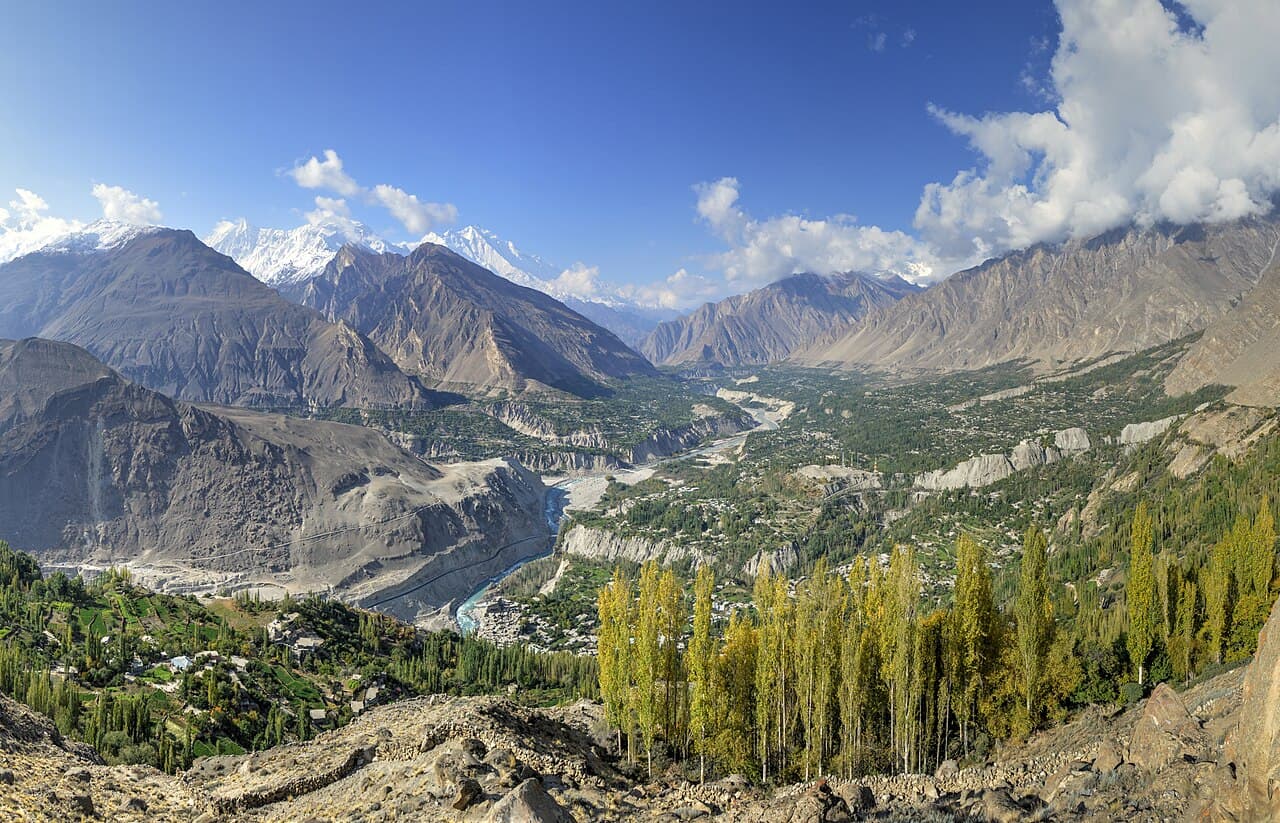
- Hunza Valley — The north is your best friend. Hunza is cosmopolitan by Pakistani standards, accustomed to international tourists, and the Ismaili Muslim community that dominates the valley has a notably progressive social culture. Women work in guesthouses, tea shops, and tourism businesses. Solo female travellers report feeling genuinely at ease here.
- Lahore — Pakistan's most culturally open city. The cafe culture in Gulberg and Liberty Market, the student population around the old university area, and the artistic communities around Androon Lahore mean there are spaces where a solo woman blends in naturally. The old city lanes require confident navigation but are not hostile.
- Islamabad — The most Westernised of Pakistan's major cities. F-7 and F-6 sectors feel more like a modern Middle Eastern capital than a conservative South Asian city. Women jog in Margalla Hills National Park without incident.
- Gilgit-Baltistan broadly — The tourism infrastructure, the relatively open mountain culture, and the Ismaili and Shia majority communities across much of GB make the north the most comfortable region overall.
- Karachi — More complicated. Pakistan's most diverse city has every kind of neighbourhood. DHA and Clifton are comfortable; the older commercial districts require more awareness. Karachi's social scene is actually quite liberal by Pakistani standards but the city's street life demands urban street-smarts.
What to Wear: The Practical Calculus
Covering up is not submission to oppression — it is pragmatic travel intelligence that makes your experience immeasurably smoother. The single best thing a solo female traveller can do is buy a shalwar kameez within the first 24 hours of arriving. It costs PKR 1,500–3,000 at any market, it is genuinely comfortable in Pakistan's climate, it signals respect for local norms, and it dramatically reduces the amount of attention you attract. Add a dupatta (long scarf) worn loosely around your shoulders. You do not need to cover your hair at all times — you will see plenty of Pakistani urban women who do not — but having the dupatta available for mosques, shrines, and conservative towns is essential.
Loose-fitting clothing that covers your arms, collarbone, and legs to at least the knee is the baseline for every context outside your hotel room. This is not optional advice — it is the difference between moving through Pakistan with ease and being the daily focus of every room you enter. Fitted jeans worn alone (without a long top that covers the hips) will generate significantly more unwanted attention than a salwar kameez. Pack accordingly.
Accommodation Strategy
Solo female travellers should prioritise guesthouses and hotels that explicitly cater to international tourists. In Hunza, Serena Hotel Karimabad and the family-run guesthouses around Altit and Ganish village have hosted solo female travellers for decades and understand the needs. In Lahore, Regale Internet Inn near the Walled City has female-friendly facilities. In Islamabad, the guesthouses in F-7/2 are all accustomed to solo international travellers of any gender.
Avoid budget options that are clearly aimed at Pakistani male labourers or truck drivers — not because of danger, but because the management genuinely will not know how to accommodate you and your stay will be awkward for everyone. The extra PKR 500 per night for a place with an international-facing reception is absolutely worth it.
The Female-Only Train Carriage
Pakistan Railways operates a dedicated Ladies' Coach on all long-distance trains. This is a genuine sanctuary — comfortable, less crowded than the general carriages, and presided over by a female attendant on most routes. Book it. The Lahore-to-Karachi overnight Karachi Express and the Islamabad-to-Lahore Subak Raftar service both have ladies' coaches. Ticket prices are identical to general class. Book in person at the station booking office with your passport — online booking is possible but occasionally glitches on the international payment gateway.
The Hospitality Paradox
Here is the most disorienting thing about Pakistan for solo female travellers: the extraordinary hospitality is real, and it is also somewhat gendered. You will be invited into homes, offered meals, and provided with guides, helpers, and companions — many of whom are genuinely trying to make sure you are safe and comfortable. Some of this is wonderful. Some of it becomes suffocating. Learning to graciously decline ongoing assistance without causing offence is a skill worth developing.
The phrase "shukria, main theek hoon" (thank you, I am fine) said with a warm smile and confident body language closes most interactions without any friction. Pakistani social culture respects confidence. A woman who clearly knows where she is going and what she is doing earns immediate respect, even in conservative settings. Hesitance and confusion invite well-meaning but overwhelming intervention.
Honest Challenges You Should Plan For
- Solo restaurant dining — In smaller towns, sitting alone in a dhaba as a foreign woman will generate significant attention. In cities, restaurants with family sections (a standard feature of Pakistani restaurants) are the answer — women are expected and welcomed in the family section, which is typically separated or curtained from the all-male general area.
- Transport logistics — Long-distance bus travel is generally fine (use the front seats). Shared taxis and minibuses can be uncomfortable when full of male passengers. In cities, use inDrive or Bykea (both operate in Lahore and Karachi) to book rides with rated drivers rather than flagging down random vehicles.
- Evening mobility — After dark, stick to areas you know and use apps for transport. Pakistan's cities are not especially dangerous at night by international standards, but solo women walking deserted streets after 9 pm will attract attention and occasional following that is better avoided.
- Photography — Some Pakistani men object strongly to being photographed without permission. Always ask first. Women photographing men in traditional settings (bazaars, mosques) should be especially cautious.
The Part Nobody Tells You
What most travel advisories fail to capture is the depth of genuine connection available to solo female travellers in Pakistan in a way that is simply not possible in a mixed-gender group. Pakistani women — who are often invisible to male travellers — open up completely to a solo foreign woman. You will be invited into homes. You will sit in the women's section at weddings and be fed until you genuinely cannot move. You will have conversations in broken Urdu and universal gesture that communicate more than a perfectly translated tour script ever could. The Pakistan that solo female travellers access is a different country from the one on the standard itinerary, and many women who have made the trip describe it as one of the most humanly generous experiences of their travelling lives.