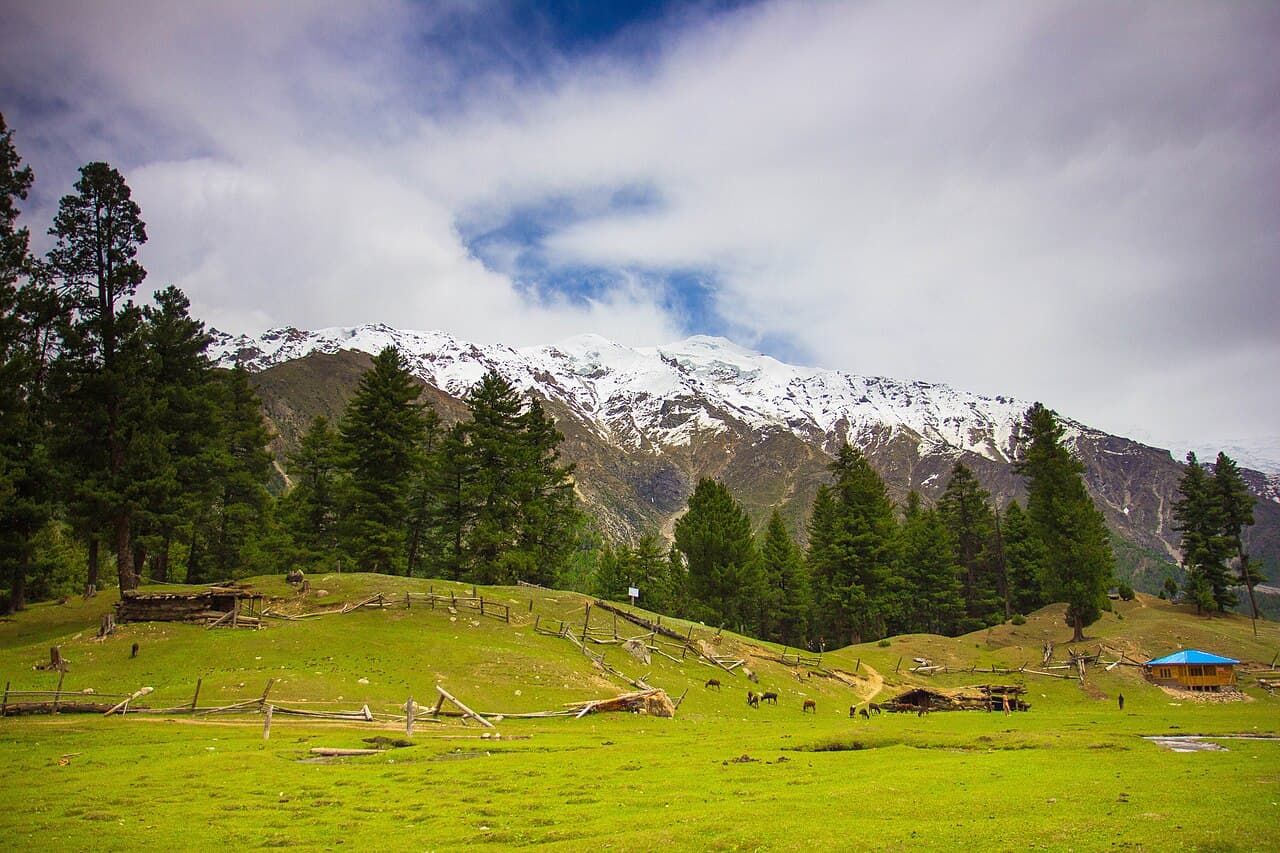
The Karakoram Highway is not a road that politely asks to be taken. It demands your full attention, punishes overconfidence, and rewards careful preparation with views that rival anything on the planet. Built over two decades by Pakistani and Chinese engineers at an enormous human cost — the memorial at Passu lists over 800 workers killed — the KKH connects Islamabad to the Khunjerab Pass at 4,733 m, threading through the Karakoram, Himalayan, and Hindu Kush ranges simultaneously. No other paved road in the world passes through three of the planet's great mountain systems. This guide covers the full drive from the capital to the Chinese border and everything you need to do it properly.
The Route Overview
The classic KKH drive runs roughly 1,300 km from Islamabad to Khunjerab Pass, with the typical stopping pattern creating a journey of five to seven days minimum, though two weeks allows genuine exploration of the side valleys and villages. The main towns on the route, with approximate distances from Islamabad:
- Abbottabad — 120 km. Entry point to the mountain foothills.
- Besham — 290 km. Last major petrol stop before the gorges.
- Chilas — 500 km. Gateway to Nanga Parbat (8,126 m). Rock carvings nearby.
- Gilgit — 610 km. Capital of Gilgit-Baltistan. Critical logistics hub.
- Karimabad / Hunza — 700 km. The journey's emotional centrepiece.
- Passu — 770 km. The Cathedral Cones. Passu Glacier. Batura Glacier trail.
- Sost — 810 km. Last Pakistani town. Customs and immigration for China crossing.
- Khunjerab Pass — 900 km. 4,733 m. Pakistan-China border.
Before You Leave Islamabad: Vehicle and Permits
If you are driving your own vehicle, have it fully serviced before departure. The KKH above Besham is genuinely demanding — steep climbs, hairpin descents, and road surfaces that vary from smooth Chinese-rebuilt tarmac to potholed legacy sections. Minimum requirements: good tyres with adequate tread (mountain roads in rain are lethal on worn rubber), a full-size spare, a basic tool kit, and jump cables. A high-clearance 4WD is not strictly necessary for the main KKH tarmac but becomes essential if you plan any side-road exploration. Carry a minimum of two full jerrycans of petrol — fuel stations are sparse and occasionally dry between Besham and Gilgit.
Foreign tourists do not need a special permit to drive the main KKH from Islamabad to Khunjerab, but you will need to register at the Gilgit-Baltistan Checkpost at Thakot Bridge (around Km 330). Keep your passport and copies of your visa handy — there are multiple checkposts along the highway where registration is mandatory for foreigners. If you plan to turn off toward Skardu, Deosai, or the Naltar Valley, additional NOCs (No Objection Certificates) may be required; get these from the DC office in Gilgit.
Day-by-Day Itinerary
Day 1: Islamabad to Besham (290 km, 5–6 hours)
Leave Islamabad early — before 7 am if possible. The first stretch through Haripur and Abbottabad is straightforward four-lane highway. After Havelian, the road narrows and begins climbing toward the Karakoram foothills. The Karakoram Highway officially begins at Hasan Abdal, though most drivers mark the true start at the point the plains give way to the Indus Gorge beyond Thakot Bridge. Besham is a functional town — not picturesque, but it has several decent guesthouses (PTDC Motel is reliable at PKR 4,000–6,000 for a double room), a couple of petrol stations, and good roadside karahi restaurants. Fill up here.
Day 2: Besham to Chilas via Sazin and Dasu (210 km, 5–7 hours)
This is the most technically demanding day of the drive. The road hugs the Indus River through a series of brutal gorges — the Indus Kohistan section — where the road sometimes narrows to a single lane cut into vertical cliffside. Drive slowly, use your horn on blind corners (this is universal etiquette on mountain roads in Pakistan, not aggression), and pull over whenever large trucks are coming the other way. Rockfall is a constant low-level hazard; be alert for fresh debris on the road, particularly after rain. The scenery is spectacular and severe simultaneously — sheer granite walls dropping to a jade-green Indus hundreds of metres below.
Stop at Shatial (Km 370 from Islamabad) to see the Shatial rock carvings — thousands of petroglyphs and inscriptions in Kharoshthi, Brahmi, Sogdian, and Pahlavi scripts left by ancient Silk Road travellers. They are scattered across boulders right beside the road and entry is free. Chilas is reached in the late afternoon. Chilas Hotel (PKR 3,500–5,000) is the standard stop. From certain spots around Chilas on a clear morning, Nanga Parbat — the world's ninth-highest mountain — appears in the near distance with impossible immediacy.
Day 3: Chilas to Gilgit (110 km, 3 hours)
A relatively short day, which allows for a morning detour to the Fairy Meadows trailhead (turn off at Raikot Bridge, 30 km before Gilgit). The Raikot Bridge jeep track and subsequent hike to Fairy Meadows takes a full day each way, so most KKH drivers simply take in the views from the bridge and continue. Gilgit itself is a proper city — Gilgit-Baltistan's capital, population 300,000, with a full range of hotels, ATMs, restaurants, and gear shops. This is your last chance to withdraw significant cash before Hunza and beyond. Serena Hotel Gilgit (PKR 18,000–25,000/night) is the luxury option; Park Hotel Gilgit (PKR 4,500–7,000) is excellent mid-range. Stock up on snacks, refuel, and get any required permits from the DC office near Jutial.
Day 4: Gilgit to Karimabad / Hunza (90 km, 2–2.5 hours)
This short drive is pure theatre. The highway climbs from Gilgit into the Hunza Valley — the landscape shifting from the bare browns and greys of Gilgit gorge to the remarkable patchwork of irrigated terraces, apricot orchards, and poplar groves that define Hunza. Attabad Lake appears suddenly about 25 km before Karimabad — a startling turquoise expanse created by a catastrophic 2010 landslide that buried the village of Attabad and blocked the Hunza River. The road now passes through five tunnels blasted through the cliff above the lake. Boat rides on Attabad Lake cost PKR 800–1,200 per person and are essential — the colour of the water against the surrounding rock faces is genuinely surreal. Karimabad is Hunza's main tourist hub. Allow two nights minimum. Eagles Nest Hotel (PKR 8,000–14,000) has the most famous view in the valley — from the terrace, Rakaposhi, Ultar Sar, Diran Peak, and Bublimotin are all visible simultaneously. The town's main bazaar has good local dry fruit shops (Hunza apricots, mulberries, and walnuts are among the best in the world at PKR 500–1,200/kg).
Day 5: Karimabad — Day Exploration
Spend a full day in Hunza. Morning: hike to Eagles Nest viewpoint above Duikar village — about 1.5 hours from Karimabad, entirely accessible without a guide. The sunrise view from here, with all four major peaks turning pink while the valley below is still in shadow, is a reason enough to have made the entire trip. Afternoon: visit Baltit Fort (PKR 600 foreigners) — a 700-year-old mountain fortress that sits above Karimabad with a curated museum inside. The adjacent Altit Fort (PKR 400) is older and arguably more atmospheric, requiring a 20-minute walk down to the old Altit village below.
Day 6: Karimabad to Passu (70 km, 1.5 hours)
Passu is Hunza's quieter, more spectacular northern neighbour. The Passu Cathedral Cones — a row of dramatically serrated granite spires rising directly behind the village — are among the most photographed geological features in the world. The village has several good guesthouses (Passu Inn: PKR 3,000–4,500). Walk the Passu Glacier suspension bridges — a series of narrow rope-and-plank bridges crossing glacial streams, with glacier and mountain views in every direction. The Batura Glacier hike (5–6 hours return) begins just north of the village and gives up-close access to one of the world's longest glaciers outside the polar regions.
Day 7: Passu to Khunjerab Pass via Sost (130 km, 3–4 hours)
Sost is the last Pakistani town and the location of customs and immigration for those crossing into China. If you are not crossing, Sost is still worth the stop — it has a good market and the drive beyond it to Khunjerab is breathtaking. The road climbs steadily from Sost through increasingly desolate, high-altitude landscape — yak herders, Marco Polo sheep, and the occasional snow leopard sighting in winter months — to the Khunjerab Pass at 4,733 m. The pass is open May to October and closes by November due to snow. The summit is marked by a monument; on clear days you can see into China's Xinjiang. Altitude sickness hits fast at this elevation — spend no more than an hour at the pass before descending. The drive back down to Passu or Sost for the night is a genuine physical relief.
Landslides: The Real Hazard
Landslides are the KKH's defining danger and they cannot be fully predicted. The highest risk period is June to August during the monsoon-influenced wet season, but landslides occur year-round in the gorge sections between Besham and Gilgit. Before departure, check the GBDMA (Gilgit-Baltistan Disaster Management Authority) social media pages and the Pakistan Army's NLI (Northern Light Infantry) updates for current road status. Local drivers and truck operators know the real-time situation — always ask at petrol stations and tea stalls whether the road ahead is clear. Blockages that strand vehicles for 12–24 hours are not unusual after heavy rain; pack a day's worth of food and water in the vehicle as standard practice.
Altitude Advice
Most of the KKH sits at moderate elevations (1,000–2,500 m) where altitude sickness is not a concern. Problems begin above 3,000 m — Sost sits at 2,800 m, and the climb to Khunjerab jumps steeply from there. Key precautions:
- Spend at least one night in Gilgit (1,500 m) and one in Karimabad (2,400 m) before pushing higher.
- Discuss altitude prevention with a qualified clinician before travel, including whether acetazolamide is appropriate for you. Do not use an over-the-counter pharmacy sale as a substitute for individualized medical advice.
- Symptoms of altitude sickness: headache, nausea, dizziness, difficulty breathing at rest. If symptoms appear, descend immediately — do not wait to see if they improve.
- Avoid alcohol for the first two days at altitude. Stay hydrated. The dry mountain air accelerates fluid loss even when you do not feel thirsty.
Fuel and Connectivity Reality Check
Petrol stations exist in Abbottabad, Besham, Chilas, Gilgit, Karimabad, and Sost. Between these towns the gaps can be 100+ km on mountain roads. Always fill to maximum capacity at every functioning station. Carry two filled jerrycans from Islamabad. Diesel is more widely available than petrol in the northern areas — if your vehicle can run diesel, this is an advantage. Mobile connectivity (Jazz/Telenor) is reasonable from Islamabad to Gilgit. Between Gilgit and Passu, Jazz has the best coverage. Beyond Passu to Khunjerab, connectivity becomes unreliable and often nonexistent. Download offline maps (Maps.me or Google Maps offline region) and carry a physical map as backup. Pakistan PTDC (Tourism Development Corporation) produces an excellent KKH road map available from PTDC offices in Islamabad for PKR 500.